Saturday, 11 October 2014

.TEXAS CHAINSAW MASSACRE (1974)


Film Review -
I absolutely loved this film. I have to say I enjoyed the use of the "DON'T GO IN THERE" moments that regularly appeared on screen, the film was really intense but not as scary as I though it would have been. For someone who hates really scary movies this was really easy on the eyes and the heart! Some moments became humerous because I expected them to happen. I don't enjoy extremely gory films, because they take away from the story line and so I believe this is why I enjoyed it so much - because there was a level of fabrication to it I wasn't easily scared. 

The Hitchhiker's character, has to be my favourite - he added an automatic level of mystery to the story line. Normally we, as the audience know that you should never pick up a Hitchhiker because of their unpredictable nature but this group of friends were extremely naive. The Hitchhiker's behaviour was clear to the audience as untrustworthy and unsafe but not to the characters and therefore I was able to work out that he had a connection to the movies title and was therefore going to murder, or reoccur at a later point. 

The use of symbols by the Hitchhiker was also significant as religion (a convention of the horror genre) was used when the Hitchhiker 'cursed' the van with his blood and marked it with his arm. I think the naivety of these four individuals provided us with a level of humour because they kind of asked for it.

 Leatherface's character added an amount of mystery to the film, we wonder who he was, what he was, why he did what it was that he was doing. He was menacing, and the use of a mask was crucial to this aspect of his character because a concealed identity is always more frightening and is a convention of he horror genre. 

Along with Leatherface's character, was the petrol station owner, Hitchhiker and the Grandfather - the scene with the four cannibal males at the table was one of the most menacing because Sally was the only female at the table - victim to all of these men and there was nowhere for her to run. She screamed and screamed but there was no way that they would have let her go, it almost seemed enjoyable to the men to watch her, scream for mercy and beg whilst they ate a meal.

Friday, 10 October 2014

. PSYCHO (1960)


Background of Alfred Hitchcock:


  • Iconic and highly influential film-maker. One of the most highly respected film makers of all time.
  • Director and producer
  • Perfectionist - aspect of the film was planned meticulously with complete storyboards done prior to shooting
  • Pioneered many techniques in the suspense and thriller genres
  • Directed more than 50 films
  • Career spanned 6 decades
  • His films draw heavily on fear and also contain black or droll humour
  • Many of his films contain cameo 


The shower scene in PSYCHO, is one of the most well known horror scenes of all time.The murder of Janet Leigh's character in the shower is the film's pivotal scene, the use of what's now known as 'Hitchhock's Psycho strings' at the moment of the murder are what makes this film so well known, they have also been used in other films such as Carrie (1976) and even Busta Rhymes - 'Gimmie some more' (1998). It was shot from December 17 to December 23, 1959, and features 77 different camera angles. The scene "runs 3 minutes and includes 50 cuts." Most of the shots are extreme close-ups, except for medium shots in the shower directly before and directly after the murder. This scene was extremely interesting, the murder of Marion was extremely unexpected. Norman Bates' character comes across as a very convincing victim of an abusive other in the beginning of the film, however we later realise he is the killer and which is an amazing twist to the storyline.I almost hoped as Marion did, that she would go back to her previous life and make amends with both her boss and the man she stole from.

The shower scene is extremely significant because she, appears so optimistic that she then aims to wash away her sins (stealing the money) however this is not in fact the case and she is instead murdered by a mystery character who appears to be a female (Bates). The murder of Marion, then leaves us the audience with the knowledge that we can not simply get away with 'murder' - if you pardon the pun - we have to pay for our mistakes, and also NEVER stay in a hotel with no other guests.

Psycho is based on Robert Bloch's 1959 novel of the same name, loosely based on the case of convicted Wisconsin murderer Ed Gein an infamous criminal known for hurrendous murders and later his obsession with females (specifically his mother) something he had in common with the character Norman Bates and also Hitchcock.

Alfred Hitchcock was on the of the most iconic and highly influential film makers of and this very film, has in fact a revolutionized the horror/thriller genre. Psycho is widely credited with spawning the horror genre of today known as 'slasher' sub-genre, those that also come under this genre are - Halloween (1978), Nightmare on Elm Street (1984), I know what you did last summer (1997) etc.

Thursday, 9 October 2014

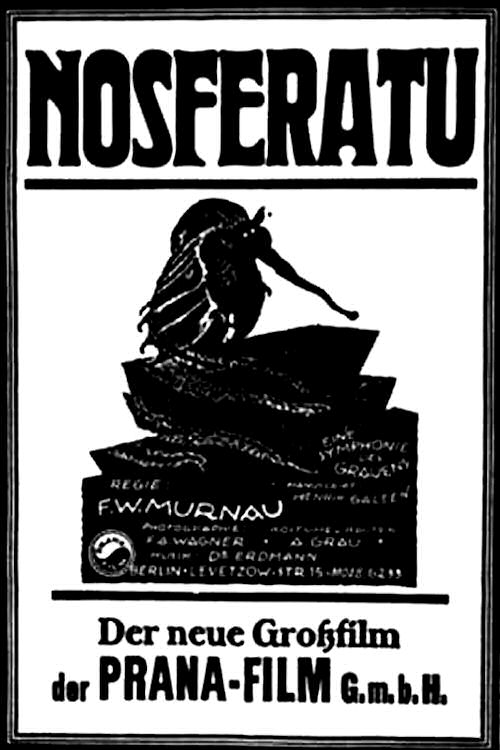
. NOSFERATU (1922)


Nosferatu is a 1922 German Expressionist horror film, starring Max Schreck as the vampire Count Orlok.
The film, shot in 1921 and released in 1922, was an unauthorized adaptation of Bram Stoker's Dracula.

Nosferatu consisted of a very stereotypical representation of vampires.  The vampire lived in a traditional castle, alienated from the rest of society. making him an outcast and a mystery to others, something to fear. Count Orlak's appearance was extremely ugly and menacing, which encouraged our hate for the character presented. He slept throughout the day, and chose not to partake in meals with his guest, this is a convention of vampire characters which adds an element of mystery but also tells us they are nothing like regular humans. Orlak is quite hideous, this encourages us to fear him - he has a long hawkish nose, dark eyes and bushy brows.Sinister music when the camera focuses on Orlak, tells us that he is a dark and evil character. In comparison to contemporary depictions of Vampires, orlak is not as charismatic or good looking - so would not have many opportunities to prey on victims, Edward from Twilight would however be able to victimize humans easier because he is extremely good looking and charismatic.

Wednesday, 8 October 2014

. VAMPIRE FILMS AND REPRESENTATIONS - TWILIGHT

'TWILIGHT'

The vampires in the twilight saga are presented in the traditional way, in regards to their pale skin. However unlike the traditional vampire, they are extremely beautiful and can be out in daylight (traditional vampires normally avoid sunlight) as they appear to sparkle like crystals when doing so they don't go to school in summer because of this, as people will know that they're different. The vampires in this film are in fact vegetarians, which is obviously not a conventional aspect of representations of a vampires. All of the vampires however present disdain because of their forms and because of that they choose not to bite other humans so they aren't also forced to live the life of a vampire - never dying over centuries and centuries. One of the main protagonists falls in love with a human girl and he also acts as the protector of her. Unlike the other two vampires : Eli and Count Dracula, Edward has a very likeable character because he is attractive,young and protective of Bella which causes the audience to really fall in love with him.

Tuesday, 7 October 2014

. VAMPIRE FILMS AND REPRESENTATIONS - VAN HELSING

'VAN HELSING'


The vampire, Count Dracula in this film is presented as a mature male who appears to be an insane and sinister individual. He is presented as an erotic individual with a love of women, and he has many wives who are obviously vampires also who produce extreme violent behaviour, towards the character Van Helsing. Much like the stereotype,he has an uncomfortable relationship with what can be seen as a religious weapon e.g cross, he however is immortal and is able to remove a knife from his body with no need for medical attention. He wears all black, and during interactions with the character Van Helsing (who is much like a bounty hunter) he snarls and speaks with a strong Transylvanian accent. Dracula, unlike Eli is a very sociable individual, which is rare with most depictions of vampires as we normally see them only interact with victims, however The Count even entertains guests at a ball. We also realise he has no reflection, and fangs which we know are stereotypes of a vampire figure and therefore add to his overall sinister presentation. 

Monday, 6 October 2014

. VAMPIRE FILMS AND REPRESENTATIONS - LET THE RIGHT ONE IN

'LET THE RIGHT ONE IN'

The vampire in this film,Eli, is presented as a young girl who was around the age of 12 - her age and sex were factor that encouraged us as the viewers to empathize with her more than other characters. It was hard to view her as a sinister character, or in the traditional way vampires are stereo-typically presented in vampire films because she had a soft and caring side which we saw when she interacted with the main character Oskar. She is able to control herself, in regards to craving blood of those she knows well however she is still a vampire and therefore she can not live without it - she does abstains for as long as she can but as we know she (much like most vampires) is very strong and can easily overpower humans. However Eli can only interact with others in their homes, if they don't invite her in verbally she starts to bleed all over. and we also find out that regular foods make her (vampires) physically sick. In this film, cats were used to ward of the vampire and in one case they actually attacked.